
Choosing the Best Cat Litter
Who would have thought that there would be a plethora of options when it comes to cat litter. We didn’t! But here we are helping you choose the best cat litter out there. Because let’s face it: our feline friends are like royalty – they’re high maintenance.
It’s imperative that they have quality cat litter. To be fair, you also want a comfortable bathroom experience. But at least, you don’t have to take them outside to do their business.
There is so much variety when it comes to cat litter. Some are cheaper, some are scented, and some are even hypo-allergenic (for humans and for cats). While browsing the best cat litter products on the market, consider these important features.
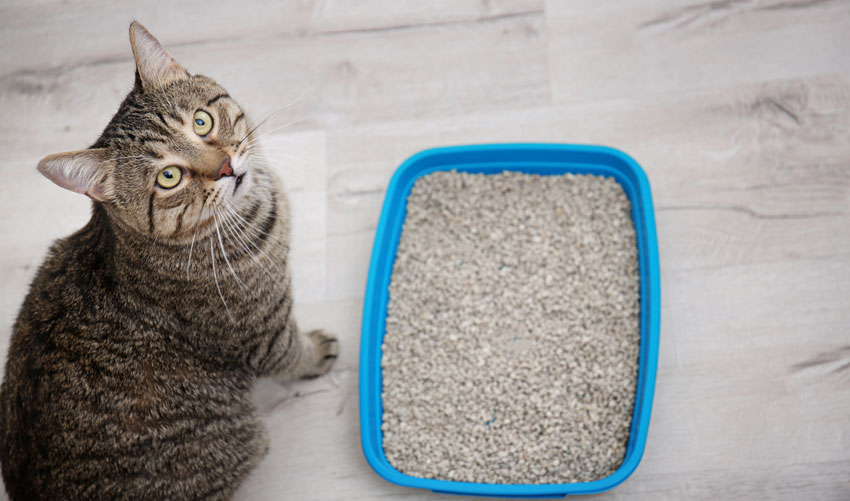
Smell/Odour Control
Studies have shown that most cats prefer unscented litter (their sense of smell is strong). With this in mind, it will be in your cat’s and even your best interests to find formulations that come with odour-free guarantees.
Sorry feline owners, the best way to control odour is just by scooping often!
Clumping Litter
Along with an unscented litter, your next best consideration is to find a clumping litter – except for kittens younger than 6 – 7 weeks of age.
Carly Fox, a staff doctor at Animal Medical Center, says that a clumping litter is the best option:
“It allows for easy removal of urine and feces and you don’t have to dump the whole box of litter — just scoop up the part that’s soiled and then replace as needed.”
The top forms of clumping litter include: clay, corn, wheat, pine and grass. But take note, corn and wheat clumping litters are hypoallergen, therefore not ideal for cats that have asthma.
It’s been pointed out anecdotally that clumping litter (specifically sodium bentonite based) is unsafe for cats. However, there is no scientific research to back this up. Ultimately, it’s up to you and your cat’s needs!
Dust Free
Some cats may be more sensitive to dust. Or you may just want to prevent any respiratory issues from starting. That’s why it’s good to look for litters that boast low or no dust.
Consistency
For ultimate softness on your cat’s paws and easy digging for you, opt for cat litter that is a gentle, medium granular consistency. You don’t want litter that is too fine or too course but a good balance.
Biodegradable Ingredients
If you want your kitty to have a pleasant litter experience while also protecting the environment, think about prioritizing cat litter that is made of biodegradable ingredients, such as corn, wheat, pine, grass seed cat litter. Just take note that corn and wheat are also common cat allergens.
Top Cat Litter
Ultimately, it’s actually more important to keep the kitty litter clean than using a specific type. With all of this key information fresh in mind – happy cat litter shopping! Below are our top picks.
Dr. Elsey’s Precious Cat Attract Unscented Clumping Clay Cat Litter
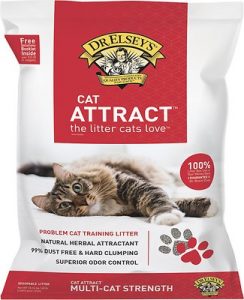

When it comes to your beloved cat, there’s no doubt they deserve the best – especially when it comes to kitty litter. Give your purr-fect friend the best clay cat litter out there with Dr. Elsey’s Precious Cat Attract Unscented Clumping Clay Cat Litter. Many felines find themselves in shelters after experiencing any number of litter box accidents, and Dr. Elsey’s aims to spread awareness. Cat Attract’s granule size, in combination with overall texture and scent, work together to solve a variety of issues that begin in the litter box.
Once problems are addressed directly, pet parents can begin to enjoy their four-legged friend rather than stress over bathroom breaks. Precious Cat Attract Unscented Clumping Clay Cat Litter provides superior odor control, in a hard clumping formula that works well with mechanical litter boxes, as well as sifting boxes. A 99.9% dust-free formula means clean air and clean surfaces, in addition to less tracking throughout your home.
Purina Tidy Cats Clumping Cat Litter
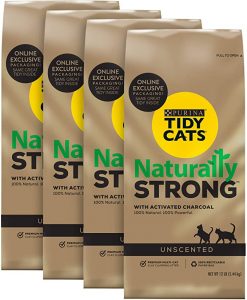
Provide your multi-cat home with a premium clay-based kitty litter, with Purina Tidy Cats Naturally Strong Clumping Cat Litter. An unscented formula provides strong clumps, controlled with the natural odor protection of activated charcoal. Because Tidy Cats traps molecules before they stink, activated charcoal provides superior odor control when compared to baking soda (by volume).
Tidy Cats is recyclable, and naturally sourced for a more eco-friendly kitty litter product. This clumping cat litter is also free of fragrances and dyes, with an unscented formula that clumps hard, and offers the best in litter box odor control. Treat your felines to a clay-based kitty litter they can depend on, with Purina Tidy Cats Clumping Cat Litter.
Purina Tidy Cats Free & Clean Clumping Cat Litter
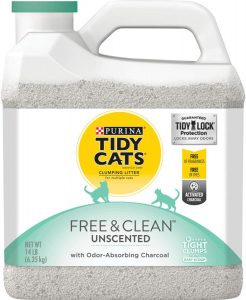
Featuring 10-day odor control, Purina Tidy Cats Free & Clean clumping cat litter provides strong clumps for multi-cat homes. Lock away smells, and enjoy round-the-clock odor prevention with an unscented formula that keeps indoor air fresh. Pet Parents can enjoy uncompromising quality, without the hassle of artificial scents or colors.
Tidy Cats kitty litter utilizes an instant, moisture-activated odor trapping powerhouse: activated charcoal. Clay also works hard to provide a strong clumping action for ease of scooping solid, and liquid waste. Maintain a happy atmosphere by absorbing odors, and leaving a few days between scoops with Purina Tidy Cats Free & Clean Clumping Cat Litter.
Fresh Step Advanced Clumping Cat Litter with Activated Charcoal & Natural Odor Control – Unscented
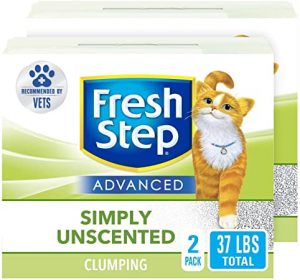

Odors are no match for Fresh Step’s Advanced Clumping Cat Litter, thanks to activated charcoal’s natural odor control. Suitable for multi-cat homes, and felines of various ages, this unscented kitty litter provides 10 days of odor control, without artificial fragrances or dye.
High-quality clay provides strong clumps that hold together and prevent crumbling. Pet parents can enjoy less tracking throughout their home, as well as clean air and clean surfaces. Fresh Step works hard in order to prevent odors and moisture from causing issues down the road, for a happier, healthier cat.
Dr. Elsey’s Premium Clumping Cat Litter
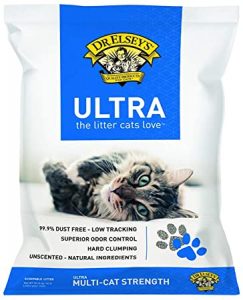
Dr. Elsey’s Premium Clumping Cat Litter provides a strong clumping action, which is perfect for households with multiple cats. A hypo-allergenic, dust-free formula prevents tracking on top of counters, as well as ensuring high-quality air. Dr. Elsey’s litter utilizes a medium sized grain, to combat tracking from being stuck between toes.
A heavier mix of kitty litter means moisture cannot easily filter through to the base of the litter box, in order to form strong clumps. Once a strong clump has been created, this premium kitty litter holds together tight, without easily breaking apart. Pet parents can fill sifting and mechanical litter boxes with Dr. Elsey’s cat litter, and enjoy natural odor control sans chemicals, or perfumes.